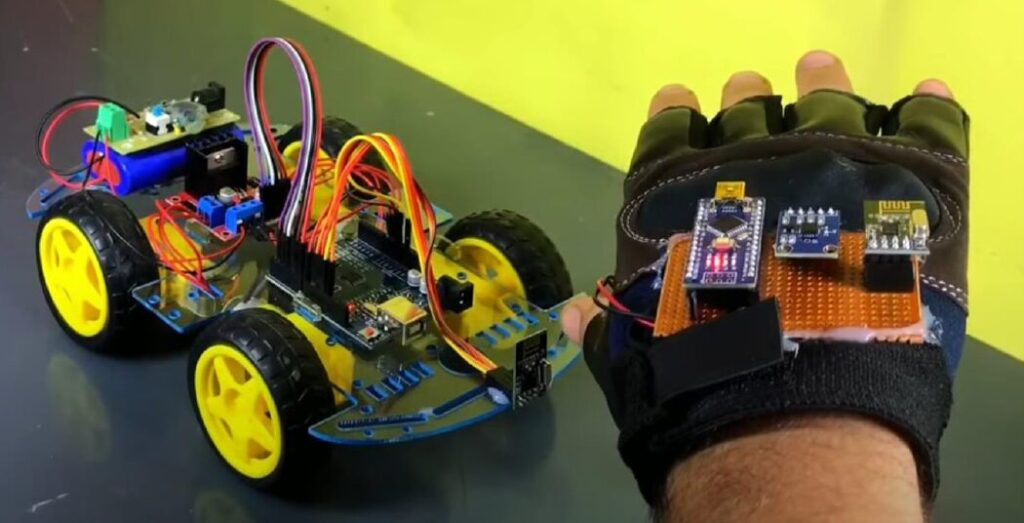
Superkitz specializes in Human–Machine Interaction & Control (HMI), a technology that enables seamless and effective communication between humans and machines. This field focuses on making it easy for users to interact with devices and systems through intuitive methods such as touch, voice commands, gestures, and intelligent interfaces.
Through Human–Machine Interaction & Control, users can operate and manage machines more efficiently without requiring complex technical knowledge. These systems are designed to enhance usability, improve accessibility, and create a more natural interaction experience.
HMI plays a crucial role across multiple domains, including :
- Robotics and automation
- Healthcare systems
- Industrial control and monitoring
- Smart homes and intelligent environments
By simplifying how humans interact with machines, Human–Machine Interaction & Control helps make technology more user-friendly, efficient, and accessible, driving innovation in modern digital and automated systems.
Human-Machine Interaction (HMI) entails human-machine interactions through various types of interfaces such as buttons, touch screens, voice, and gestures.
The Control System controls the machine through user inputs or sensor feedback.
Together, they create systems that respond accurately, safely, and intelligently to human commands.
In today’s technology-driven world, the interaction between humans and machines is becoming more advanced and natural. Gone are the days when machines could only be controlled through complex commands or manual switches. Modern HMI systems are designed to simplify user experience, allowing even non-technical users to operate sophisticated systems with ease. At Superkitz, we emphasize building intuitive interfaces that enhance usability and efficiency.
One of the key aspects of HMI is user interface design. Whether it’s a touchscreen panel, a mobile application, or a voice-controlled assistant, the interface must be clear, responsive, and easy to navigate. A well-designed HMI reduces errors, improves productivity, and enhances user satisfaction. For example, in a smart home system, users can control lights, fans, and appliances through a simple mobile interface or voice commands, making daily tasks more convenient.
Control Systems form the backbone of intelligent machine operation. These systems continuously monitor inputs from sensors, compare them with desired outputs, and adjust the system behavior accordingly. This process, known as feedback control, ensures stability and accuracy. For instance, in a temperature control system, sensors measure the current temperature, and the control system adjusts heating or cooling devices to maintain the desired level.
Automation is a major application area of HMI and control systems. In industrial environments, machines and processes are controlled through programmable logic controllers (PLCs) and supervisory control systems. Operators interact with these systems using HMI panels to monitor performance, detect faults, and make adjustments in real time. This not only increases efficiency but also improves safety by reducing the need for manual intervention in hazardous environments.
In robotics, HMI allows for human interaction in the form of using techniques like gestures, remote controls, or even brain-computer interactions to control robots. This makes them more versatile and flexible, depending on the specific task. In industries such as health care, robots may provide help in performing daily tasks for patients. Similarly, in the manufacturing industry, robots may be controlled by humans through the interface.
Another sector that uses HMI and control systems widely is the healthcare field. Medical devices such as patient monitors, infusion pumps, and diagnostic machines require efficient control and user interface designs to make them more efficient. It is essential because such machines deal with sensitive matters like patients’ health. The more efficient the HMI systems become, the more easily health care professionals can interact with these devices
At Superkitz, we focus on hands-on projects that demonstrate the practical implementation of these technologies. Learners can build systems such as touch-controlled devices, voice-activated automation systems, gesture-based controllers, and PID-based control systems. These projects help in understanding both the user interaction and the underlying control logic.
Another important consideration is safety and reliability. Control systems must be designed to handle errors, unexpected inputs, and system failures without causing harm. Features such as fail-safe mechanisms, alarms, and automatic shutdowns are essential in critical applications. We introduce these concepts to ensure that learners build systems that are not only functional but also safe and dependable.
The integration of artificial intelligence with HMI is opening new possibilities. Intelligent systems can learn user preferences, predict actions, and provide personalized experiences. For example, a smart assistant can adapt to a user’s routine and automate tasks accordingly, making interactions more efficient and natural.
As technology continues to evolve, the importance of effective human–machine interaction and precise control systems will only increase. These technologies are key to developing smarter, more responsive, and user-friendly systems across various industries.
In conclusion, Human–Machine Interaction and Control Systems are essential for creating technologies that are easy to use, efficient, and intelligent. By bridging the gap between humans and machines, they enable seamless communication and precise control. At Superkitz, we are dedicated to making these concepts practical, accessible, and inspiring for anyone looking to innovate in the world of smart technology.